
Practical guide
Map the cab and work body as separate graphics zones
Record the truck’s actual body, equipment and useful surfaces before requesting coverage.
Read the guide: Map the cab and work body as separate graphics zonesChicago commercial vehicles & fleets
Commercial truck graphics built around the cab, working body and equipment. Make the business clear while keeping the truck ready for its job.
Guaranteed response within 2 hours.Free planning tools and buyer downloads below.
A clear scope before the spend.
Free work truck body mapper below. Use the result with any wrap shop.
More useful project detail
A pickup, service body and upfitted truck each offer different surfaces. Use these guides with the body mapper to record cab coverage, equipment and access instead of treating the truck as one rectangle.

A visual you can keep
Cab, upfit and equipment need their own scope references.
Use the planning example from Chicago Fleet Wraps, download a copy, or read the related project guides.
Practical guide
Record the truck’s actual body, equipment and useful surfaces before requesting coverage.
Read the guide: Map the cab and work body as separate graphics zonesPractical guide
Check what racks, ladders, toolboxes and working positions hide before approving the message.
Read the guide: Review truck graphics with the equipment in placePractical guide
Identify the damaged area, source artwork and surrounding condition before asking for a replacement.
Read the guide: Scope a damaged truck graphic by zonePicture the possibilities
Look at the message, the coverage and the working views.
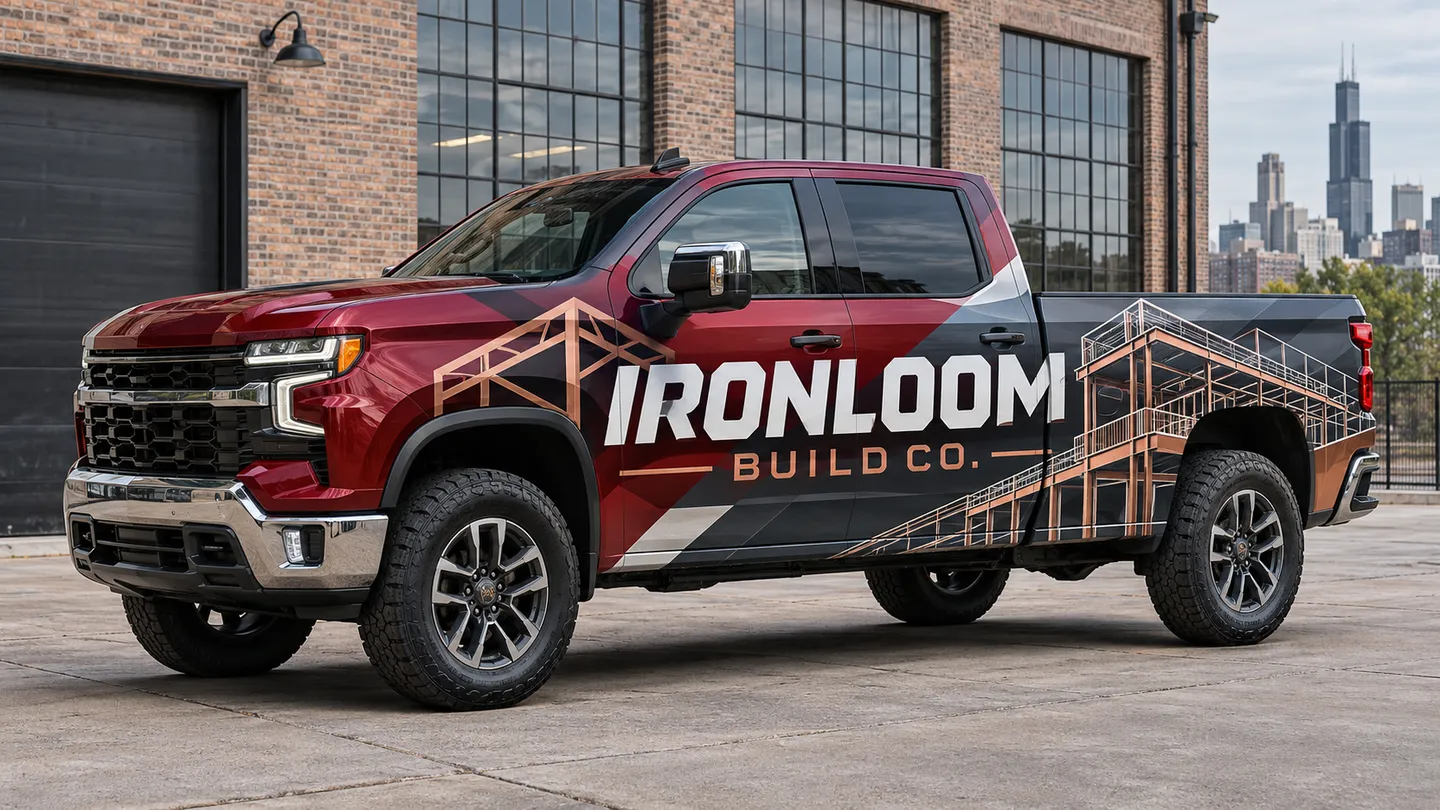
Ironloom Build Co. is a fictional business. These generated design concepts illustrate ideas to discuss for your vehicles.
Plan the graphics for your vehiclesWhy put your business on a vehicle?
Give the cab and working body a clear, coordinated identity.
Plan around toolboxes, racks, handles and the way the truck is used.
Discuss preparation, access and vehicle availability as part of the project.
A clear scope before a price
Vehicle size, covered areas, artwork, preparation, existing graphics and the proposed material system all belong in the price discussion.
Useful when the priority is a clear name, service and contact route.
Discuss this scopeCompare the exact panels, message and finish with the full-coverage option.
Discuss this scopeConfirm the included painted panels and any exclusions on the actual vehicle.
Discuss this scopeRequest a price for the actual vehicles and agreed coverage. The free tools below help you compare the assumptions.
Let’s talk vehicles
Tell us how many vehicles you have. We’ll follow up about the vehicles, coverage, design and timing.
Guaranteed response within 2 hours.Know the next step
Guaranteed response within 2 hours. Final project pricing and dates follow review of the scope.
Name, email, phone and vehicle count. Share the project context through the free tool if it is useful.
Discuss the actual vehicles, coverage, artwork, existing graphics and timing.
Check the written scope and vehicle-specific artwork, including the business wording and included surfaces.
Confirm scheduling, preparation, review and the applicable care information.
The free tool
Use the example values to explore, then replace them with your project details.
Use the tool without sharing contact details. Entering a valid email or phone in the inquiry form saves your project entries, filenames, analysis and selected original files, even if unfinished. Original files: up to 50 MB each and 200 MB per batch.
Example work van; details to confirm / Pickup bed
| Zone | Proposed areas | Review |
|---|---|---|
| Cab | Driver door; passenger door | Confirm doors, trim and dimensions |
| Work body | Bed sides; tailgate | Review compartments, seams and access |
| Equipment | Toolbox; handles; access doors | Keep access and moving parts under review |
This is a scope map, not a measured template. Confirm access, surface condition and exact body dimensions.
Ready to discuss the vehicles? Get fleet pricing. Save your result to use in that conversation.
Free tools for a better buying decision
A 12-page workbook with generic wrap concepts and fillable worksheets for coverage, quote comparison, budget, fleet availability, artwork, proof approval and vehicle records. Use it with any wrap shop.
Fill it in electronically or print it. No email needed.
Take this to any wrap shop
Print it off so you remember to ask. A practical checklist covering scope, materials, artwork, preparation, scheduling, warranty and handoff, plus questions for this project.
Confidence comes from the details
Use these checks when you review a proposal, a proof or a wrap shop. Keep the answers with your project.
Print the wrap-shop questionsSee the tradeoff
A service body with tool compartments needs different layout zones from a smooth pickup bed.
Illustrative values, not a completed customer project.
Example work van; details to confirm / Pickup bed
| Zone | Proposed areas | Review |
|---|---|---|
| Cab | Driver door; passenger door | Confirm doors, trim and dimensions |
| Work body | Bed sides; tailgate | Review compartments, seams and access |
| Equipment | Toolbox; handles; access doors | Keep access and moving parts under review |
This is a scope map, not a measured template. Confirm access, surface condition and exact body dimensions.
Leave with something useful
Separate the cab, work body and equipment so your wrap scope fits the truck you actually use.
Map my work truckBuild it from the project details you enter.
Keep the assumptions and open questions visible.
Copy, save or print the result for your next conversation.
Commercial wrap service
Plan a commercial truck wrap using the actual cab, body, equipment, and operating surfaces. Identify which panels are suitable for graphics and which areas need separate evaluation. Keep the message clear around hardware, inspect the paint, and confirm any preparation or removal work before setting installation availability.
Commercial trucks are working equipment before they become a graphics canvas. Toolboxes, liftgates, racks, access doors, and replacement bodies can interrupt surfaces that look simple in a generic template. A useful wrap plan starts with the truck as it is configured today. Document its body, the way crews use it, and the message it needs to carry, then decide how graphics can fit those operating conditions without relying on an assumed standard shape.
A commercial truck can combine a factory cab with a service body, box, flatbed, or other equipment. The two areas may have different dimensions, paint histories, and available surfaces. Provide current photographs rather than relying only on the chassis model. Note ladder racks, storage compartments, reflective markings, and equipment that changes the visible profile. Treat this inventory as a practical design map. It helps identify where a logo can remain recognizable, where text may be interrupted, and where the proposed coverage needs a closer material or condition assessment.
A truck layout needs to work with the features crews use every day. Handles, compartment gaps, hinges, and frequently opened panels can divide an otherwise continuous graphic. Review the layout with these elements visible, and consider how the truck is normally parked or approached. A consistent identity can span the cab and body without requiring text to bridge every break. Decide where the essential information belongs, then use supporting graphics to connect the remaining areas. This makes the design review more practical than evaluating a flat image without the truck's hardware.
Commercial trucks can carry more wear, residue, or previous repairs than their model year alone suggests. Flag peeling paint, corrosion, old graphics, and textured trim before coverage is agreed. Different surface materials and shapes can require different products or preparation, so a single film assumption may not fit the entire truck. Provide the dates when the truck can leave service and ask for a schedule based on the assessed work. Any quoted timing should account for removal, cleaning, installation complexity, and applicable post-installation requirements.
Buy with the questions answered
The useful coverage depends on the cab, body, equipment and message. Lettering, selected printed panels and full coverage are options to compare on the actual truck.
Guaranteed response within 2 hours. The next conversation confirms the vehicle details, proposed coverage, artwork, existing graphics and timing so a project-specific scope can be discussed. Sending an inquiry does not reserve an installation date.
Review the covered surfaces, final business wording, vehicle-specific artwork, proposed material system, preparation and removal needs, price exclusions and agreed handoff. The free wrap-shop questions give you a record to use with any supplier.
Before you decide
For project-specific help, use the four-field inquiry form.
Get fleet pricingThey can share brand elements, but their layouts need separate review. A pickup bed and a compartmented service body offer different spaces and interruptions. Keep the visual identity consistent while adjusting scale and placement so the main message fits the actual cab and body.
Read the detailed guide: Review truck graphics with the equipment in place
Yes. Current equipment helps explain which areas are visible and accessible. Include racks, toolboxes, mounted machinery, liftgates, and other body additions in the photographs. These features can affect the proposed layout and installation access, so a bare manufacturer image may miss important project conditions.
Read the detailed guide: Map the cab and work body as separate graphics zones
They require separate evaluation rather than an automatic yes. Surface texture, material, and contamination affect adhesion, and some vehicle graphic systems exclude textured plastics. The quote should distinguish suitable painted panels from trim, flexible materials, and other components that may need different treatment or remain uncovered.
Read the detailed guide: Map the cab and work body as separate graphics zones
Follow the agreed preparation instructions and provide access to the surfaces being assessed. Identify old graphics, damaged paint, and equipment that may affect the work. Cleaning and drying are important, but final substrate preparation and project readiness should be confirmed for the selected graphic system and vehicle condition.
Read the detailed guide: Map the cab and work body as separate graphics zones
Give the business name, primary service and a useful contact method a clear order. Concise fleet messaging helps the most important information stand out.
3M sourceUnpainted or textured plastic, rubber and silicone need separate evaluation. 3M's vehicle guidance excludes or limits several of these surfaces for the films covered by that guidance.
3M sourceContamination and trapped moisture can undermine adhesion. Seams, crevices and areas beneath seals need attention as part of the final cleaning and drying process.
ORAFOL sourcePreparation, coverage, vehicle shape, existing graphics and the installation team affect downtime. Obtain a project-specific schedule before committing vehicles to a fleet rollout.
3M sourceCommercial truck projects can be planned for vehicles working in Chicago, Bridgeview, Bedford Park, and Alsip, with access and timing confirmed for each job. Tell us about your vehicles.